Student Finance
got your head in a spin? Let us put you straight! We'll show you where
the money is, how much you can get and – crucially – how to get your
hands on it.
Getting to grips with
Student Finance
might sound as appealing as Katie Hopkins on a crisis hotline, but it
boils down to this: going to university is pricey – but there's
lots of cash out there to help you.
Unfortunately, not only is some of that cash
really well hidden, the rules about who gets what keeps changing. Even
keeping track of fee rises, is enough to make you cross-eyed. That's where we come in.
Why bother reading this guide?
 Save the Student
 has been following the student loan changes for years,
petitioned against higher fees, created the first ever
student loan repayment calculator for the new fees and commented in countless newspapers from the very beginning of the recent shake ups.
By no means do we support charging uni fees but we believe it is vital that the
myths are debunked and students are aware of the
facts.
Are
student loans as bad as many make out? What do they mean and how might they affect you? Is it even worth going to university anymore?
Checking
out the info on this page will mean you'll be less confused about
undergraduate uni costs, more confident about getting the funds you
need, and have a better idea how much the whole shebang's going to set
you back. Read on.
 Student finance
is never a simple topic to cover (well, except when uni was free!). On
this page we’ll touch only on the most important things students
need to know. But if you’re struggling to find the will to digest it all right now, here's a quick summary:
- The maximum universities can charge for tuition fees in 2018/19 is £9,250 a year
- Full-time students starting in 2018 can apply for a max maintenance loan of £8,700 depending on household income (more for those in London)
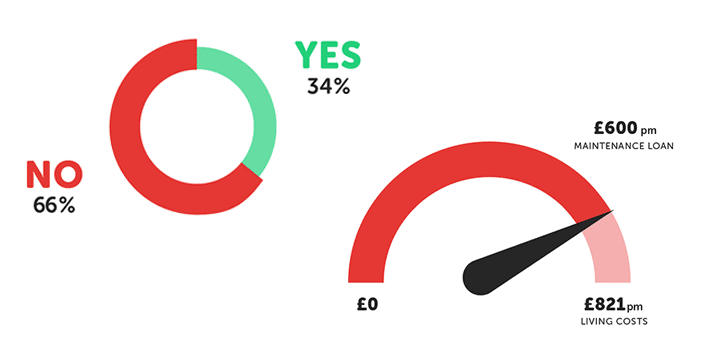
- The maintenance loan is not enough to live on for most students so you could need extra income or to learn to live on less
- The average university graduate will be saddled with a student debt of around £50,000
- You don't start repaying until the April after graduation and once you start earning over £25,000 per year. Repayments are then 9% of anything above this.
- After 30 years any outstanding student debt is written off
- Interest is charged at the rate of inflation +3% pa whilst you are at university, which continues at interest plus 0-3% pa thereafter (depending on your salary)
- Your student loan repayments are deducted from your paycheck by your employer
- Maintenance Grants are still available for current students that started uni before 2016 (as they receive a smaller loan)
- Other grants and funding are available for new starters in 2018 for those with disabilities or dependants, or from low-income backgrounds
- There are differences between systems in England, Wales, Scotland and N. Ireland
- Whilst the cost of university education has tripled, students should be aware that what it costs and what you pay are likely to be very different
Keep reading to get a clearer understanding of what the charges – and the
student finance on offer – means for you.
How much does university cost?
Tuition fees

The most that UK universities can charge for tuition in 2018/19 is a hefty
£9,250 a year.
If that sounds a lot, it is – especially when you consider that in
2011, the most they could charge was £3,375 (jump back a few more years,
and tuition was free…). However, unless you've got a souped-up
DeLorean, £9k+ is where we're at.
That said, there's a bit of
variation. Each country in the UK sets its own maximum. Not all
universities charge the full Monty (though most do).
International/postgrad courses, and private institutions, also have
different fees.
Have all fees gone up to £9,250?
Almost! The vast majority of UK universities now charge
£9,250 for courses since 2017, but not all – so make sure you check their website for info.
There is some good news though, the government has recently chosen to
freeze the maximum tuition fees at £9,250
a year (aren't they so kind…) rather than go ahead with plans that were
likely to see them increase by £250 a year from now until, well,
infinity.
Having said that, this government is know for its U-turns and constant chopping and changing so
stay tuned to our updates and keep an eye on this page!
Differences across the UK
Here's maximum that public universities
can charge in undergrad fees, depending on where you live when you apply:
BUT, if you're entitled to Student Finance:
- *In Wales,
for those that started before 2018/19 there are fee grants of £4,954
available to Welsh/EU students and the rest is taken out as a loan.
- In Scotland, you can get free tuition at Scottish unis. Study elsewhere and you can be charged full whack (but with access to Student Loans to pay for it).
- In N Ireland, you can be charged up to £4,160 (unless you study elsewhere in the UK).
- In England, you kinda get the thin edge of the wedge: it's up to £9,250 wherever you study, and you can't claim EU status over here!
- EU students can get the same deal as locals, including free or discounted tuition.
What do tuition fees pay for?
Tuition,
obviously. They also contribute to uni facilities and provisions. Some
of it goes towards financial support for students struggling to get by,
or from low-income families.
At the end of the day,
you're paying for it: find out where it goes, how it's spent,
what it doesn't include
and, crucially, what returns you'll get on it, whether that's a
better-stocked library or a better chance of getting a job when you
graduate.

Should you shop around for lower tuition fees?
Most
universities charge what all the others in their country charge so,
unfortunately, it's not like you can ditch Waitrose for Lidl! Living
costs such as rent, food and transport – the things you have to pay for
up-front – may be a better way to judge what's affordable for you (use
our
Student Money Survey to see how costs vary around the country).
Where
fees matter more is if you opt to pay more than you could, such as if
you get free tuition or grants in your home country that you'd lose by
studying somewhere else.
Students from England have the biggest
incentive to shop around. While you can be charged up to £9,250 wherever
you study, some universities – especially elsewhere in the UK – charge
significantly less. You just have to find them.
Smaller colleges
are also an option: some offer the same degrees for less than their
big-name rivals. Staying local (living at home and studying in your
neighbourhood) can also net you substantial savings on living costs.
Don't forget that UK students can study at some universities in Europe,
as well as in the Republic of Ireland,
for free: check
our guide to studying abroad for the big picture.
The
big tot-up is how you stand with the idea of graduating in debt, and
whether you'd rather pay more up-front, or push back as many costs as
you can. Take a look at our
Loans lowdown before you decide.
The
bottom line is that, fees or not, getting a degree is pricey. Studying
at a uni (or location) you have no love or respect for just because it's
cheaper will still be cash burner. Don't forget your subject passions
or the uni's teaching credentials/facilities, and how both can help you
get your cash back through a decent income later on!
How much would uni could cost you
per hour?
Find out with
our calculator!
Course costs
At
up to £9,250 a pop, you'd think tuition fees would see you fully paid
up. They don't. You'll have to confirm extra course costs for yourself,
but generally you're looking at things like books, stationery, lab kit
or art materials, field trips, printing, photocopying and presentation.
Once you've costed that lot up, you'll need to
allow for them in your budget to make sure you've got enough cash to get by.
Living costs

Credit: Nickelodeon
This is what no one tells you before you go: living costs are the
biggest drain on student pockets.
While tuition costs can be pushed back until you graduate, you'll still
have immediate costs to bankroll: accommodation, bills, transport,
socialising, laundry and, if you're into that kind of thing, food.
Now,
there's no need to panic: some of those can be covered by the
Maintenance Loan or any bursaries and grants you're entitled to. Chances
are, though, you'll need a bit of back-up from savings, your folks, a
part-time job or
smart money-making ideas.
As with course extras, get an idea of all your costs and stick them in a
budget planner so you'll know how much you need to get by
before you land on campus.
How to pay for university

The Tuition Fee Loan
Most
first-time undergraduates on an approved course are likely to be eligible for
Student Finance in some flavour.
The
Tuition Loan, which covers your fees, is the big one. The money's paid
directly to the university, and you don't have to repay it until you
leave your course and are earning enough (
more about that below).
Your first port of call – for this, the Maintenance Loan or any grants going – should be your country's
Student Finance body:
You
can get a maximum of £9,250 per year towards your tuition depending on
the cost of your course. Most prospective students should be fine but
it's worth checking the eligibility criteria for taking out the loan.
Those on part-time courses can also apply for tuition fee loans.
The Maintenance Loan

Credit: 20th Century Fox
The
sole purpose of this loan is to cover your day-to-day living costs.
Differently to the tuition fee loan, it's paid directly to you.
You don't
have
to take out a Maintenance Loan but, if you don't have a mountain of
cash to fall back on, it's an option. Everyone eligible to apply can get
some of the Loan, but getting the full bucket of fries is
‘income contingent': the less household income you have, the more you
can apply for (up to a maximum).
Here's how much full-time students can apply for in England:
Don't forget that these are just the maximum amounts you
could apply for. What you
actually
get will vary: the numbers are different for the rest of the UK, with
household income ultimately dictating what you're entitled to ask for.
As
a rough guide, in England you'll need household income of £25,000 or
less to get maximum maintenance. Above £25k, money's awarded on a
sliding scale.
The table below is an indication of what you could
get if you are starting uni this year and living away from home (outside
London).
If your parents earn above £25,000/year they are expected to help you out (more on that below).
Top tip:
maintenance funds are doled out in 3 instalments throughout the year
(at the start of each term), so it's up to you to make it last. Don't be
tempted to bust it all in Fresher's week, or it could be a long term of
eating cut-price noodles!
You might also find maintenance money
doesn't arrive before you get to uni – make sure you've got some other
cash to hand to keep you going.
Untaxed income, such as ISA interest and some benefits, don't have to be declared when applying for
Student Finance. Including them unnecessarily could mean you get less funding. See our
top tax facts for info, and pass it on!
Maintenance grants
In
England, students that started uni in 2016 and after can no longer get a
Maintenance or Special Support Grant. This has been a bit of a
bombshell. Some students worry that means they can't afford to go to (or
stay at) uni – but what's the story?
Grants are
student finance you don't repay. The Government has stopped this free cash, and now expects
new starters to take on bigger loans to, essentially, pay their own way. The
total amount of maintenance money on offer hasn't changed much. However, you're likely to leave uni with more to pay back.
That
doesn't have to mean uni is any less affordable. As with the Tuition Loan, you'll only start repaying when you earn enough: get the
Loans lowdown to see where you stand.
– The change only affects students funded under the English system
– It only affects new starters from 2016 – if you already get a Grant, it won't be taken away (see below)
– If you want to go to university, there'll still be funding to help you get there.
In
the rest of the UK, it's business as usual: there are still Maintenance
Grants and Bursaries up for grabs. Check our regional guides for what's
going in
Scotland,
Wales and
Northern Ireland.
If you started before 2016 and are currently at uni the table below shows the grants you are eligible to receive.
Money from parents

Credit: Dreamworks
As things stand, some
Student Finance
pay-outs take your household income (how much you or your parents earn)
into account. If there's a shortfall between how much the State
contributes, and how much you
really need to live on, you're
expected to cough up for some of the difference yourself. More
specifically, your parents, guardians or partner are expected to chip
in.
In reality, that's not going to work for everyone but, whether
the money's on the table or not, it's worth thinking about your options
and having The Talk up front:
– Can your folks contribute any cash? Will it be a loan or a freebie? Any conditions on how you spend it?
– If they can't help you financially, how else could they support you? Don't underestimate the power of leftovers.
Feel free to show them this guide if you are struggling to convince them. We also have more on
asking your parents for money here.
If cash handouts are a no-go, now's the time to think about how else you're going to keep your budget in the black!
Awards and scholarships
These are the overlooked cash pots of
student finance!
Some
depend on academic achievement, but there's a huge array of criteria –
everything from studying an unusual subject to being sporty, or even
where you were born. Some pay-off tuition fees (reducing your overall
debt), while others give cash grants or kit, or a choice. We've a list
of sources to search for hidden cash
right here.
Disabled Students' Allowance (DSA)
The
DSA provides extra funding if you have a disability that affects your
studies (including long-term physical conditions, mental health, and
unseen or learning difficulties). You'll need to provide evidence to be
eligible but, if you are, there's cash to pay for specialist equipment, a
helper, and other costs.
The allowance is
on top of any
Student Finance
you get, isn't affected by household income, and doesn't have to be
paid back. Accepting other disability related grants or support can
affect whether you get DSA, so talk it over with your uni or school's
advisor first, or head over to your
Student Finance body.
Other student grants

Credit: BBC
Don't
overlook other grants going, including for course travel costs,
in-demand subjects (like teaching), and the NHS bursary. Details are in
our
Student grants, bursaries and scholarships guide.
Hardship funds
Universities
charging the full enchilada in tuition fees have to keep some of the
cash aside to help those struggling financially. Some of the money may
be ring-fenced for particular circumstances, such as students from
low-income backgrounds or with disabilities or dependants.
Whatever the score, if lack of cash is stopping you studying, talk to the uni's welfare team or
student money advisor about any emergency grants or loans going. Heads-up: you'll need to take copies of your
Student Finance letters and
your budget.
Other sources

The
turn2us grants calculator
can help you find charity funds based on a whole heap of criteria –
everything from your religion, nationality or gender to health
conditions, personal issues and family situation.
While banks aren't the first place to turn if you're looking for a cuddle, learning how to use your
student account properly – and when to use benefits like an
interest-free overdraft – can help you get your hands on extra cash when you need it.
Your own cash
There's no denying that anything you can chuck in the pot can only help you out.
That could be
squirreling away a few quid every time you come into cash, or finding ways to
make money. Give it a whirl!
The lowdown on Student Loan Repayments
How is the Student Loan repaid?

9% of anything you earn over £25,000 per year
You'll
only start repaying your Student Loan from the April after you've
graduated and are earning more than the repayment threshold (£25,000 in
England or Wales, £18,330 a year in Northern Ireland and Scotland).
Note: for those that started uni before 2012 you will start repaying when you earn over £18,330/year.
You'll pay 9% of anything you earn
above that amount. If you don't earn more than the threshold, you won't pay anything.
Here's what your monthly repayments could look like (remember these are just guide figures!):
The money's
automatically docked from your wages
before you get paid and, because repayments track your weekly or
monthly income, if your salary goes down (or stops), you won't pay until
you're back over the threshold. Unless you're self-employed, it all
happens magically without you needing to do anything or remember to make
payments.
The
student loans
company have started taking some repayments early. If they've taken any
money from your wages before the April after your graduation you will
be eligible for a
student loan refund.
After 30 years, any remaining loan is wiped
(it's
25 years in NI, 35 years in Scotland). So, if you don't go into a big
bucks career, you may not earn enough to pay back the full Loan – and
there's nothing anyone can do about that.
Note: for those that started uni before 2012 your debt is wiped 25 years after graduating.
On
the other hand, the more you earn, the more you'll pay back. It's worth
bearing in mind as by the time your salary pumps up to decent levels,
you might want to do other things with it (such as paying for a mortgage
or buying a new car)!
If you want to find out how fast you're likely to hit the salary threshold, check the
average starting pay for your degree. To get an idea whether you'll pay off the whole Loan (or how long it could take you), plug that number into our
Student Loan repayment calculator.
Loans smallprint you really need to know

You pay tax on your initial salary
What's
that? Double whammy, you say? Unfortunately, Student Loan repayments
don't entitle you to any tax breaks. That means you'll pay income tax on
your salary
before the Loan repayment comes off.
For
example, if you earn £45,000 a year, any income tax you owe be collected
in the normal way. When your Loan repayment is calculated, though, it's
still worked out from that starting £45k figure. You won't pay less
income tax, even though you've had to ‘lose' a bit of your salary
towards Loan repayments.
Income doesn't just mean salary
Whether you're paying tax or paying back the Student Loan, ‘income' includes
any
taxable money you get. That includes interest from some savings
accounts over £2,000, and certain job perks or State benefits. Worth
keeping an eye on as they could unexpectedly tip you over the repayment
threshold.
WARNING: The terms aren't set in stone
Shockingly, there's nothing in the Loan agreement guaranteeing that salary thresholds or the 9% figure will be honoured.
In
fact, the Government's did freeze the £21,000 salary threshold which
was meant to go up each year. However, after a lot of campaigning from
Save the Student
and other sites they decided to revert to the original agreement and
increase the threshold each year (starting at £25,000 in 2018/19).
There
is a worry that this ability to play around with the terms means that
they're likely to do the same in future (for either good or bad).
Interest is the sting in the tail
Just like any kind of loan, the Student Loan whacks interest onto everything you borrow.
For students in Scotland and NI, interest is set at RPI which is currently 3.1% per year (although changes every September)
In England and Wales, however, interest is charged
on top of the rate of inflation. That means you'll be charged between whatever inflation is set at currently 3.1% (changes each September)
plus up to 3% each year.
Here's how the interest works.
Whilst at university:
You will pay the rate of inflation (RPI) plus another 3%. This will be
the same until April in the year following your graduation. Even before
graduating, students taking a loan with the SLC will have racked up a
hefty amount of interest in addition to the higher fees.
After graduating:
If you earn under £25,000 then your interest rate will be set at
inflation (RPI), as with the old system. For every additional £1k you
will be charged an extra 0.15% pa on your loan. Once you earn above
£45,000 you will incur the additional 3% annual interest rate.
(A big) However,
despite all of this, graduates will actually make repayments of around
£600 less every year compared to the old system. The catch is that the
total debt will be much higher and therefore you will be paying off your
student loan for a longer period.
Note:
Those students in England that started before 2012 will pay interest at
the rate of inflation (currently 3.1%) OR the bank of England base rate
plus 1% (currently 1.5%) depending on which one is lower.
Added interest means you'll owe more than you actually borrowed, and could be making repayments for longer. Head over to the
Student Loans Company to sniff out the numbers for yourself.
It doesn't affect your credit rating
Your
student debt doesn't go on
your credit files so it won't affect your ability to borrow in future.
However,
it could have a very small effect on mortgage applications. This is
simply to do with the fact that a student loan will mean you have less
take home pay each month. Therefore it's not the debt but more the
repayments that can have an impact (although minimal).
Finally, there's no debt collectors or angry people chasing your money with
student loans. If your salary ever dips below the minimum repayment threshold you'll just stop paying altogether.
Moving abroad doesn't save you
There is a strong rumour spread across universities that says if you move abroad for a certain amount of years then your
student debt is written off. I'm afraid this is
not the case and you still have to pay back anything you earn over £21,000.
Should I pay back the Loan early?

You can choose to clear your
student debt or make higher repayments at any time – the question is, should you?
While
you might be tempted to pay off your Student Loan in full as soon as
possible, remember that the rates and terms are better than with
commercial loans.
It's also worth thinking about how likely you
are to pay off your entire Loan based on your predicted earnings (and
remember that anything you haven't cleared after 30-ish years is wiped
off). Clearing the Loan early could mean paying when you don't have to,
plus, once you've handed the money over, you can't get it back if you
need it for anything else.
Think it over before you part with your cash, and only pay-up when you can really afford to.
So, should I get a Student Loan?

Credit: 20th Century Fox
While it's good to be cautious about borrowing in general, the Student Loan is a slightly different kettle of fish.
Firstly,
it's not like a commercial loan. Yes, it's borrowing, but on more
affordable terms than you'll get anywhere else. More importantly, paying
it back depends on earning enough later on: in that sense, it works
more like a tax than a loan. If you don't earn enough, you won't make
repayments – which is pretty much how income tax works. For that reason,
it makes sense to get a Student Loan if you're eligible, rather than
paying up-front (or paying back the Loan early!).
Most students won't be able to afford university
without
the Loan, but what you get for your ‘debt' – a degree – is a high value
purchase: it can help you earn more throughout your career than
non-graduates.
The best advice
for the current system is
to not get sidetracked by the total you'll end up owing. While that's
an important number, keeping an eye on things like your graduate salary
and monthly repayments (and how likely you are to repay) can give you
the bigger picture of whether the Loan's right for you.

ALWAYS check what other funding you could grab
Every year, hundreds of students miss out on free money
because they don't know the extra cash is there. Whether you meet the
low-income criteria or not, there could be funding out there with your
name on it, from scholarships and emergency cash to company sponsorship.
If you don't ask, you won't get, and if you don't search, you won't
find: here's where to look first.
Get a part-time job
With
two-thirds of students upping their income with a job, employment is an
obvious go-to for keeping debt in check. Check your uni's rules on
part-time work and, most importantly, make sure any gigs you go for fit
around your studies.
Take at look at our Student job section for advice on getting an in, or peruse our Part-time jobs board to see what's going in your area.
Make your own money!
No jobs in your neighbourhood? No problemo! There are scores of ways to make legit lolly, from freelancing to starting a bona fide student business. Need ideas? We've got 40 quick cash injections right here.
Don't lose out on tax
If
you don't earn more than the ‘personal allowance' each year, you won't
have to pay tax on your income, whether from wages or interest you get
from the bank. Don't pay if you don't have to or, if like many students,
you've been over-charged, get it back!
The other biggie is that knowing what counts as taxable income – and what doesn't – can help you get the Student Finance you're entitled to. It could even make a difference to how much and when you start coughing up towards your Student Loan.
Either way, it pays to get to grips with tax: read our top student tax tips to get it done in a jiffy.
Keep things in balance
Any
money coming in – whether it's loaned or earned – is just one side of
the story if you're barreling through it faster than your data allowance
in a wifi blackspot. Learn how to make it last, and you'll be on to a winner!
Hopefully this guide has given you a clearer idea of what
Student Finance
means for you, based on facts rather than hype. We've also shown you
options beyond Loans and grants, and pointed the way to cash that can
help you get to – and stay at – university. Make the most of what's out
there!
Got questions? Ask away below: we promise to give every student a response, or point you in the direction of more info.
 #ref-menu








 This year’s National Student Money Survey was answered by more than 2,300 university students: huge thanks to everyone who took part!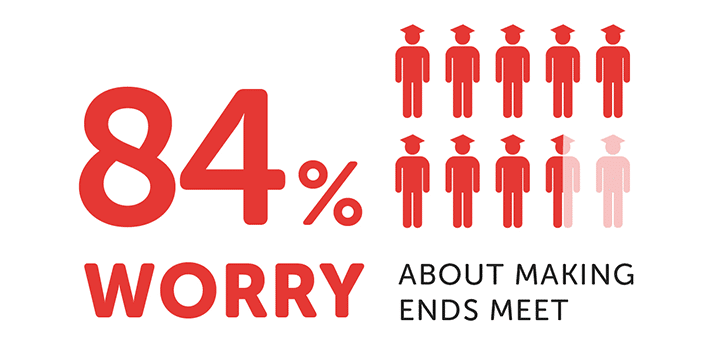
 This
year the survey probed into what effect money has on student well
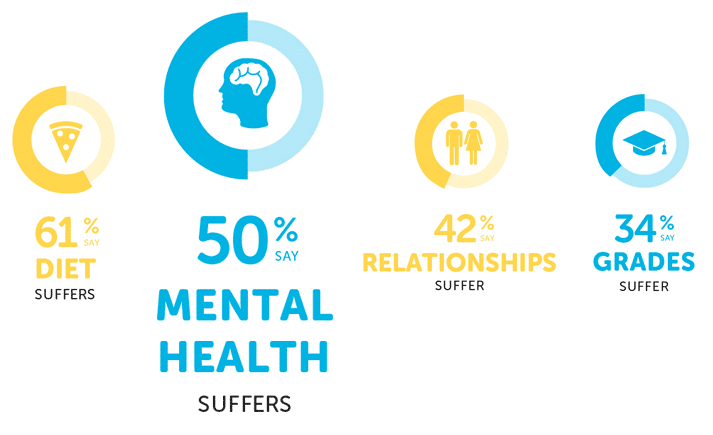
being. Worryingly, half of all students said they’d experienced mental health issues as a result of money problems, with 42% also saying hardship takes a toll on relationships with friends and family. Perhaps unsurprisingly, we received lots comments saying being poor at uni can be a lonely experience.
This
year the survey probed into what effect money has on student well
being. Worryingly, half of all students said they’d experienced mental health issues as a result of money problems, with 42% also saying hardship takes a toll on relationships with friends and family. Perhaps unsurprisingly, we received lots comments saying being poor at uni can be a lonely experience.
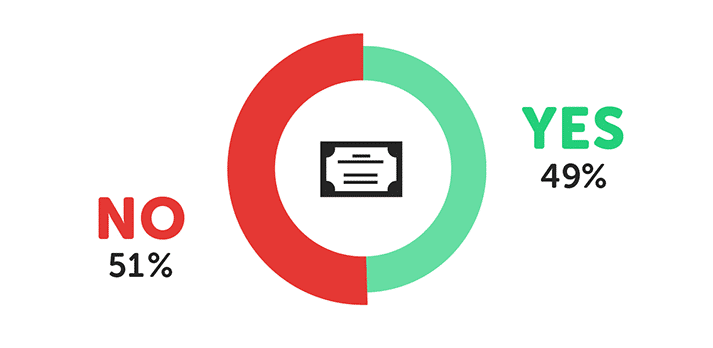
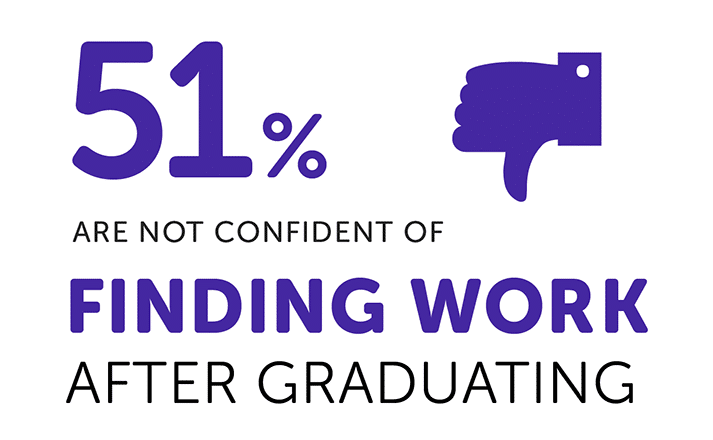
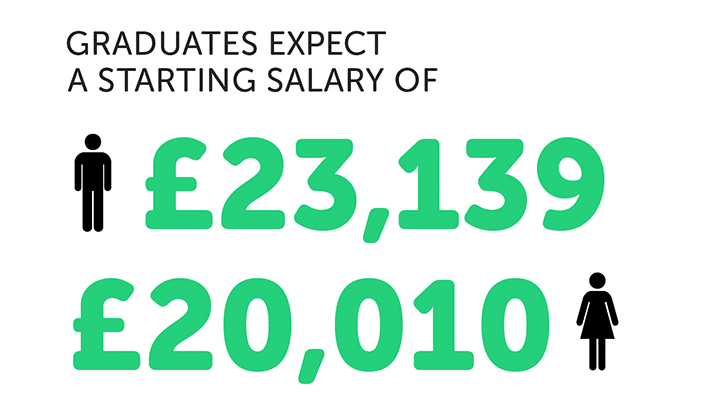 The
big question is why do students across the board expect so little
remuneration given they're shelling out increasing amounts of cash on a
degree? And, more worrying, why do female students expect to earn less off the bat?
The
big question is why do students across the board expect so little
remuneration given they're shelling out increasing amounts of cash on a
degree? And, more worrying, why do female students expect to earn less off the bat?